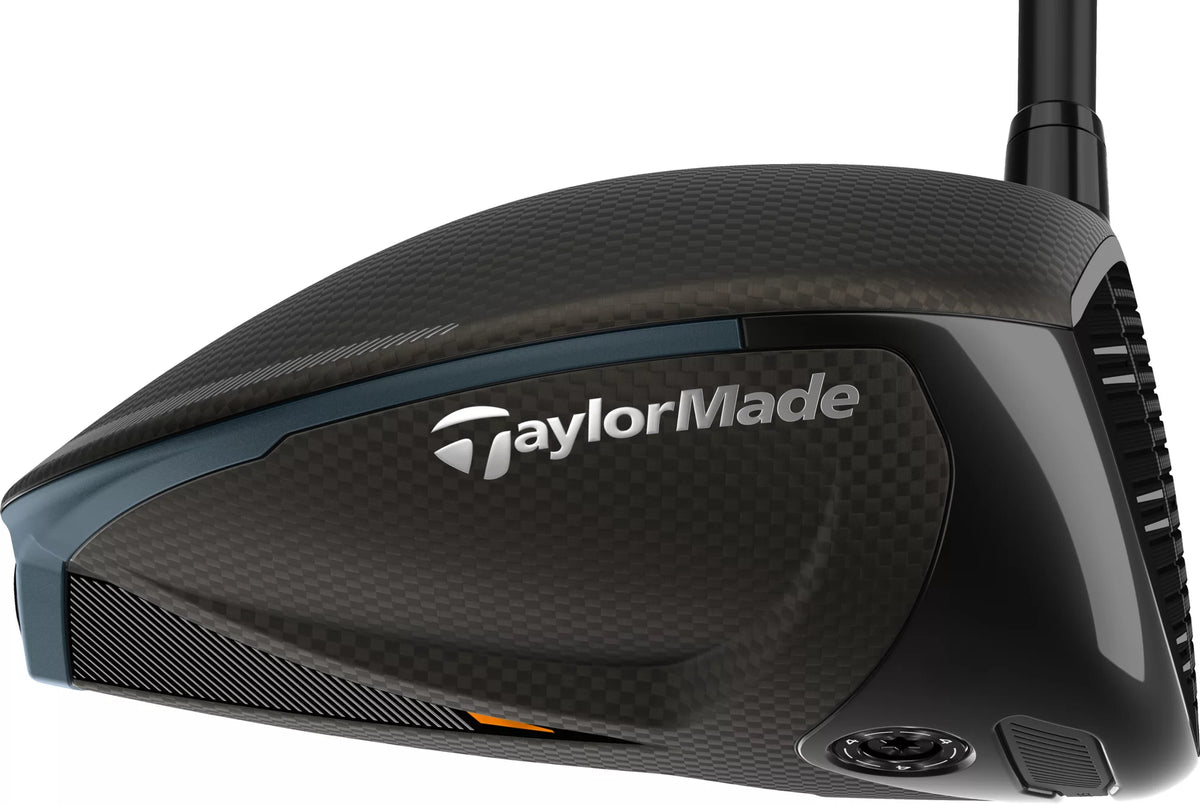
The Half-Price Sweet Spot: Does Five Years of Driver Tech Actually Buy You Yards?
A head-to-head launch monitor test between TaylorMade’s 2021 SIM2 Max and the 2026 Qi4D exposes the diminishing returns of modern big-stick marketing.
Every autumn, the golf equipment carousel spins up its familiar chorus of revolutionary carbon chassis, expanded sweet spots, and boundary-pushing moment of inertia. Yet for all the forensic CAD modeling out of Carlsbad, the central question for anyone standing in the fitting bay remains ruthlessly practical: does the latest flagship genuinely outperform a mint-condition driver from half a decade ago, or are golfers simply subsidising an astronomical marketing budget?Every autumn, the golf equipment carousel spins up its familiar chorus of revolutionary carbon chassis, expanded sweet spots, and boundary-pushing moment of inertia. Yet for all the forensic CAD modeling out of Carlsbad, the central question for anyone standing in the fitting bay remains ruthlessly practical: does the latest flagship genuinely outperform a mint-condition driver from half a decade ago, or are golfers simply subsidising an astronomical marketing budget?
That exact question was put to the launch monitor by Guy Charnock of H.I.T Golf, who pitted TaylorMade's 2021 SIM2 Max directly against the brand's 2026 Qi4D. On paper, five years separates the two heads—a half-decade window that brought multi-material crowns, shifting internal weighting, and aerodynamic refinements designed to squeeze every legal fraction of ball speed out of off-centre strikes.That exact question was put to the launch monitor by Guy Charnock of H.I.T Golf, who pitted TaylorMade's 2021 SIM2 Max directly against the brand's 2026 Qi4D. On paper, five years separates the two heads—a half-decade window that brought multi-material crowns, shifting internal weighting, and aerodynamic refinements designed to squeeze every legal fraction of ball speed out of off-centre strikes.
The financial chasm between them is far more stark than the visual profile. While the brand-new 2026 Qi4D sits at full retail markup, brand-new examples of the SIM2 Max remain readily available on the market for roughly half the price of the current flagship. In an era where top-tier drivers routinely push past the £500 barrier, the value proposition of modern legacy stock has never been more tempting.The financial chasm between them is far more stark than the visual profile. While the brand-new 2026 Qi4D sits at full retail markup, brand-new examples of the SIM2 Max remain readily available on the market for roughly half the price of the current flagship. In an era where top-tier drivers routinely push past the £500 barrier, the value proposition of modern legacy stock has never been more tempting.
Charnock’s side-by-side data comparison highlights how tight the legal manufacturing boundaries really are. The USGA and R&A caps on characteristic time (CT) and volume have effectively boxed club designers into a corner. When strikes find the geometric centre of the face, the five-year-old SIM2 Max produces ball speed and launch numbers that virtually mirror the 2026 Qi4D, proving that peak performance on flush contact hit its ceiling years ago.Charnock’s side-by-side data comparison highlights how tight the legal manufacturing boundaries really are. The USGA and R&A caps on characteristic time (CT) and volume have effectively boxed club designers into a corner. When strikes find the geometric centre of the face, the five-year-old SIM2 Max produces ball speed and launch numbers that virtually mirror the 2026 Qi4D, proving that peak performance on flush contact hit its ceiling years ago.
Where the Qi4D attempts to justify its premium ticket is across the perimeter. TaylorMade’s engineering over the past five cycles has focused almost exclusively on stability and downrange dispersion on mis-hits rather than pure center-face velocity. Yet for the mid-to-low handicap player who consistently delivers the sweet spot to the ball, those marginal gains in spin retention on high-toe strikes become difficult to defend against a 50 percent price cut.Where the Qi4D attempts to justify its premium ticket is across the perimeter. TaylorMade’s engineering over the past five cycles has focused almost exclusively on stability and downrange dispersion on mis-hits rather than pure center-face velocity. Yet for the mid-to-low handicap player who consistently delivers the sweet spot to the ball, those marginal gains in spin retention on high-toe strikes become difficult to defend against a 50 percent price cut.
The takeaway from the launch monitor bay is both reassuring and cautionary. While the 2026 Qi4D offers subtle forgiveness advantages for players fighting erratic delivery patterns, the SIM2 Max proves that older titanium-and-carbon workhorses are far from obsolete. For golfers weighing an upgrade, the smartest money in the game might just be sitting on the clearance rack.The takeaway from the launch monitor bay is both reassuring and cautionary. While the 2026 Qi4D offers subtle forgiveness advantages for players fighting erratic delivery patterns, the SIM2 Max proves that older titanium-and-carbon workhorses are far from obsolete. For golfers weighing an upgrade, the smartest money in the game might just be sitting on the clearance rack.
Gallery
"Is the latest model worth the extra money, or could you save yourself a few quid?"
Why it matters
With new flagship drivers commanding record retail prices, head-to-head testing against previous-generation models highlights the narrowing performance gap under strict governing-body limits. For consumers, choosing clearance-grade equipment from proven design cycles provides near-identical peak ball speeds at half the cost.
Sources
- 1.
- 2.GolfWRX.com on Reelsfacebook.com
- 3.The Best Golf Clubs to Buy in 2017… So Fargolfwrx.com
- 4.
Reported by the Downforce & Divots desk from the sources above.
The clubhouse.
- No replies yet. Be the first.