The Geometry of the Blade: Inside L.A.B. Golf’s Link 2.2 Evolution
Lie Angle Balance takes another crack at traditionalist aesthetics with the Link 2.2, refining the blade formula after two generations of mechanical compromise.
When L.A.B. Golf first disrupted modern putting with its Lie Angle Balance ethos, nobody bought the hardware for its visual charm. The original Directed Force mallets looked less like precision instruments and more like branding irons welded together in an aeronautics shed. Yet the physics—engineering zero torque into the strike so the face remains naturally square throughout the stroke—converted tour pros and weekend obsessives alike. The friction point has always been aesthetics. Traditionalists wanted zero torque, but they wanted it wrapped in an orthodox blade.When L.A.B. Golf first disrupted modern putting with its Lie Angle Balance ethos, nobody bought the hardware for its visual charm. The original Directed Force mallets looked less like precision instruments and more like branding irons welded together in an aeronautics shed. Yet the physics—engineering zero torque into the strike so the face remains naturally square throughout the stroke—converted tour pros and weekend obsessives alike. The friction point has always been aesthetics. Traditionalists wanted zero torque, but they wanted it wrapped in an orthodox blade.
The journey toward that synthesis has been a public engineering study. First came the Link.1, an ambitious attempt to bend Lie Angle Balance physics into an Anser-adjacent footprint. While it proved that a centre-shafted, torque-free blade was mechanically feasible, golfers noted the subtle compromises in feel and address profile. The subsequent Link 2.1 tightened tolerances and mass distribution, but questions remained over whether L.A.B. could deliver true blade proportion without fighting the laws of inertia.The journey toward that synthesis has been a public engineering study. First came the Link.1, an ambitious attempt to bend Lie Angle Balance physics into an Anser-adjacent footprint. While it proved that a centre-shafted, torque-free blade was mechanically feasible, golfers noted the subtle compromises in feel and address profile. The subsequent Link 2.1 tightened tolerances and mass distribution, but questions remained over whether L.A.B. could deliver true blade proportion without fighting the laws of inertia.
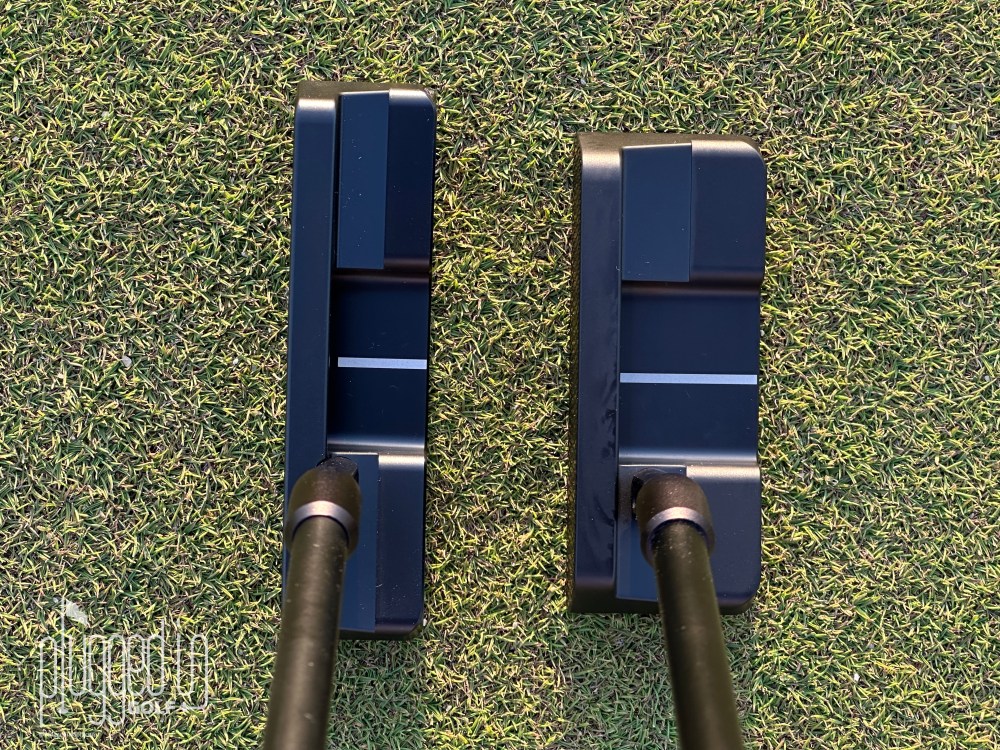
Enter the Link 2.2. The latest iteration directly targets the feedback loop from the Link.1 and 2.1 lineage, refining the head geometry and visual alignment to create what early testing suggests is L.A.B.’s most coherent blade to date. By subtly shifting perimeter weighting and smoothing out the transition from hosel mount to topline, the 2.2 minimizes the visual dissonance that often plagues zero-torque designs.Enter the Link 2.2. The latest iteration directly targets the feedback loop from the Link.1 and 2.1 lineage, refining the head geometry and visual alignment to create what early testing suggests is L.A.B.’s most coherent blade to date. By subtly shifting perimeter weighting and smoothing out the transition from hosel mount to topline, the 2.2 minimizes the visual dissonance that often plagues zero-torque designs.
What makes the Link 2.2 compelling is the ongoing philosophical tension at the heart of equipment design: the battle between pure mechanical utility and player psychology. A mallet can hide mass, tungsten plugs, and awkward bore-throughs with impunity. A blade offers nowhere to conceal structural sleight-of-hand. Every millimetre shaved off the heel or flared into the toe directly influences the putter's torque-free balance point.What makes the Link 2.2 compelling is the ongoing philosophical tension at the heart of equipment design: the battle between pure mechanical utility and player psychology. A mallet can hide mass, tungsten plugs, and awkward bore-throughs with impunity. A blade offers nowhere to conceal structural sleight-of-hand. Every millimetre shaved off the heel or flared into the toe directly influences the putter's torque-free balance point.
In pitting the Link 2.2 against its 2.1 predecessor and the original Link.1, L.A.B. isn't just updating SKUs; they are refining the threshold where modern physics meets classical golf architecture. If the Link 2.2 succeeds in eliminating the idiosyncratic feel of early zero-torque prototypes, the traditional flatstick will face its steepest existential test yet.In pitting the Link 2.2 against its 2.1 predecessor and the original Link.1, L.A.B. isn't just updating SKUs; they are refining the threshold where modern physics meets classical golf architecture. If the Link 2.2 succeeds in eliminating the idiosyncratic feel of early zero-torque prototypes, the traditional flatstick will face its steepest existential test yet.
Gallery
"A mallet can hide mass and tungsten plugs with impunity. A blade offers nowhere to conceal structural sleight-of-hand."
Why it matters
L.A.B. Golf's rapid rise forced the entire industry to take zero-torque technology seriously, but traditional blade aesthetics remained the company's toughest design frontier. The Link 2.2 represents the brand's sharpest attempt yet to win over flatstick purists without compromising Lie Angle Balance physics.
Sources
- 1.
- 2.
- 3.Odyssey Golf on Reels - Facebookfacebook.com
- 4.
Reported by the Downforce & Divots desk from the sources above.
The clubhouse.
- No replies yet. Be the first.