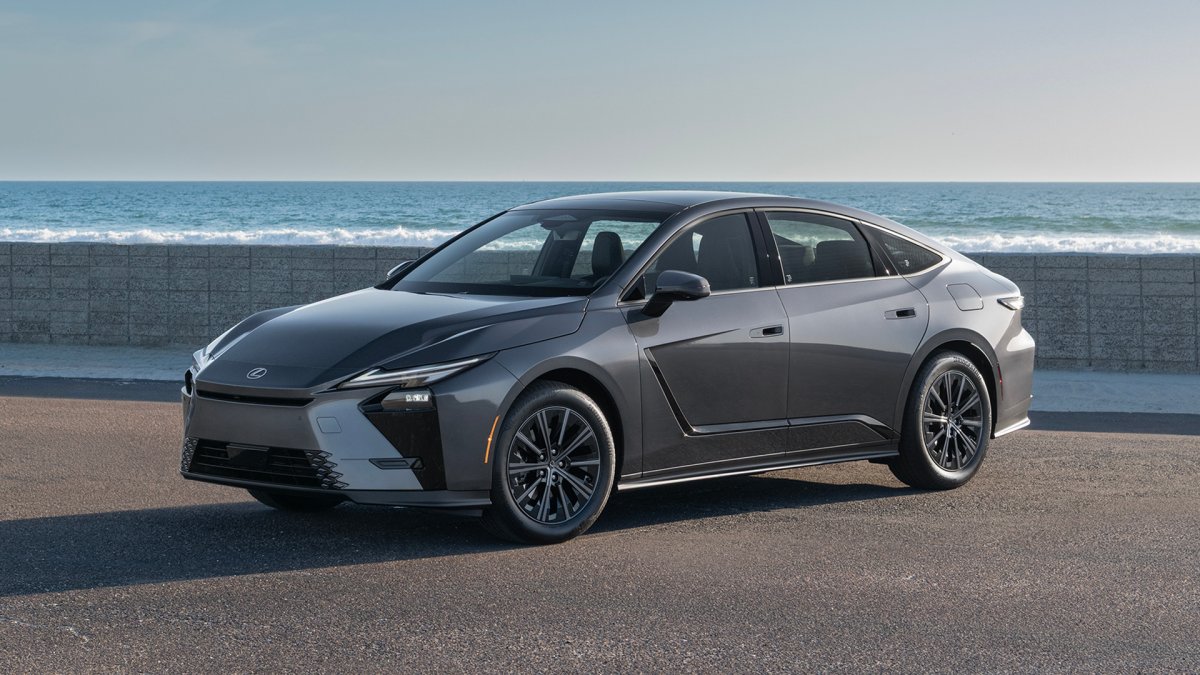
The Enduring Middle: Inside the 2026 Lexus ES Hybrid’s Existential Tightrope
As Lexus rolls out its redesigned mid-size saloon alongside the all-electric ES 500e, the hybrid classic fights for its place in the modern executive garage.
For three decades, the Lexus ES has served as the automotive equivalent of bespoke tailoring: unassuming, relentlessly competent, and almost pathologically reliable. Yet as the 2026 Lexus ES Hybrid arrives on dealership floors, it finds itself confronting an internal identity crisis. Flanked on showroom floors by an all-new, fully electric twin—the ES 500e—the perennial stalwart of the Japanese luxury marque suddenly looks less like an untouchable volume seller and more like a bridge vehicle facing an encroaching deadline.For three decades, the Lexus ES has served as the automotive equivalent of bespoke tailoring: unassuming, relentlessly competent, and almost pathologically reliable. Yet as the 2026 Lexus ES Hybrid arrives on dealership floors, it finds itself confronting an internal identity crisis. Flanked on showroom floors by an all-new, fully electric twin—the ES 500e—the perennial stalwart of the Japanese luxury marque suddenly looks less like an untouchable volume seller and more like a bridge vehicle facing an encroaching deadline.
Consumer Reports tackled this exact tension in their evaluation of the 2026 redesign, noting that while the ES Hybrid remains an editorial and consumer benchmark for low-stress motoring, the calculus around purchasing one has shifted fundamentally. The arrival of the ES 500e forces buyers to weigh whether a traditional gasoline-electric powertrain still justifies its footprint against a purpose-built EV platform sharing the same badge and wheelbase.Consumer Reports tackled this exact tension in their evaluation of the 2026 redesign, noting that while the ES Hybrid remains an editorial and consumer benchmark for low-stress motoring, the calculus around purchasing one has shifted fundamentally. The arrival of the ES 500e forces buyers to weigh whether a traditional gasoline-electric powertrain still justifies its footprint against a purpose-built EV platform sharing the same badge and wheelbase.
The 2026 redesign attempts to sharpen the saloon’s appeal with overhauled interior ergonomics, upgraded infotainment architecture, and subtle chassis refinements aimed at quieting an already cathedral-like cabin. However, early road testing highlights the familiar trade-offs inherent to Toyota and Lexus’s planetary hybrid transaxle. Under brisk acceleration, the internal combustion unit still makes its presence known with characteristic high-rpm drone, a stark acoustic contrast to the silent torque delivery promised by its EV sibling.The 2026 redesign attempts to sharpen the saloon’s appeal with overhauled interior ergonomics, upgraded infotainment architecture, and subtle chassis refinements aimed at quieting an already cathedral-like cabin. However, early road testing highlights the familiar trade-offs inherent to Toyota and Lexus’s planetary hybrid transaxle. Under brisk acceleration, the internal combustion unit still makes its presence known with characteristic high-rpm drone, a stark acoustic contrast to the silent torque delivery promised by its EV sibling.
There is also the pragmatic question of generational timing. Long-term reliability has historically formed the bedrock of ES ownership, but first-model-year redesigns inevitably introduce variables that give conservative buyers pause. Comparing the new platform against the deeply sorted, ultra-durable outgoing generations reveals that stepping into the 2026 ES Hybrid requires balancing modern cabin technology against the proven track record of older Toyota Motor Corporation architectures.There is also the pragmatic question of generational timing. Long-term reliability has historically formed the bedrock of ES ownership, but first-model-year redesigns inevitably introduce variables that give conservative buyers pause. Comparing the new platform against the deeply sorted, ultra-durable outgoing generations reveals that stepping into the 2026 ES Hybrid requires balancing modern cabin technology against the proven track record of older Toyota Motor Corporation architectures.
Yet dismissing the hybrid as obsolete oversimplifies the luxury landscape. For drivers operating without dedicated home charging or those logging relentless highway miles across uncooperative regional infrastructure, the 2026 ES Hybrid remains a uniquely frictionless tool. It delivers peerless thermal efficiency without demanding route planning or battery preconditioning, sustaining the model's core ethos even as electric drivetrains dominate executive attention.Yet dismissing the hybrid as obsolete oversimplifies the luxury landscape. For drivers operating without dedicated home charging or those logging relentless highway miles across uncooperative regional infrastructure, the 2026 ES Hybrid remains a uniquely frictionless tool. It delivers peerless thermal efficiency without demanding route planning or battery preconditioning, sustaining the model's core ethos even as electric drivetrains dominate executive attention.
Lexus clearly recognizes that transition periods are won on versatility rather than dogma. By offering both the ES Hybrid and the electric ES 500e concurrently, the manufacturer is running a controlled real-world referendum on executive luxury. Whether the hybrid endures as a long-term staple or serves as a final bow for petrol-electric executive transport, the 2026 model proves that refined pragmatism still commands respect.Lexus clearly recognizes that transition periods are won on versatility rather than dogma. By offering both the ES Hybrid and the electric ES 500e concurrently, the manufacturer is running a controlled real-world referendum on executive luxury. Whether the hybrid endures as a long-term staple or serves as a final bow for petrol-electric executive transport, the 2026 model proves that refined pragmatism still commands respect.
Gallery
"The 2026 redesign forces buyers to weigh whether a traditional hybrid still justifies its footprint against an all-electric twin."
Why it matters
The concurrent release of the 2026 Lexus ES Hybrid alongside the ES 500e highlights how legacy luxury automakers are hedging their bets during the EV transition. It tests whether brand loyalists still prioritize hybrid dependability over pure electrification in the mid-size executive segment.
Sources
- 1.
- 2.Car Reviews and New Car Test Drives - MotorTrendmotortrend.com
- 3.
- 4.Best Used Cars: 10 Top Picks for November 2026 - Consumer Reportsconsumerreports.org
Reported by the Downforce & Divots desk from the sources above.
The clubhouse.
- No replies yet. Be the first.