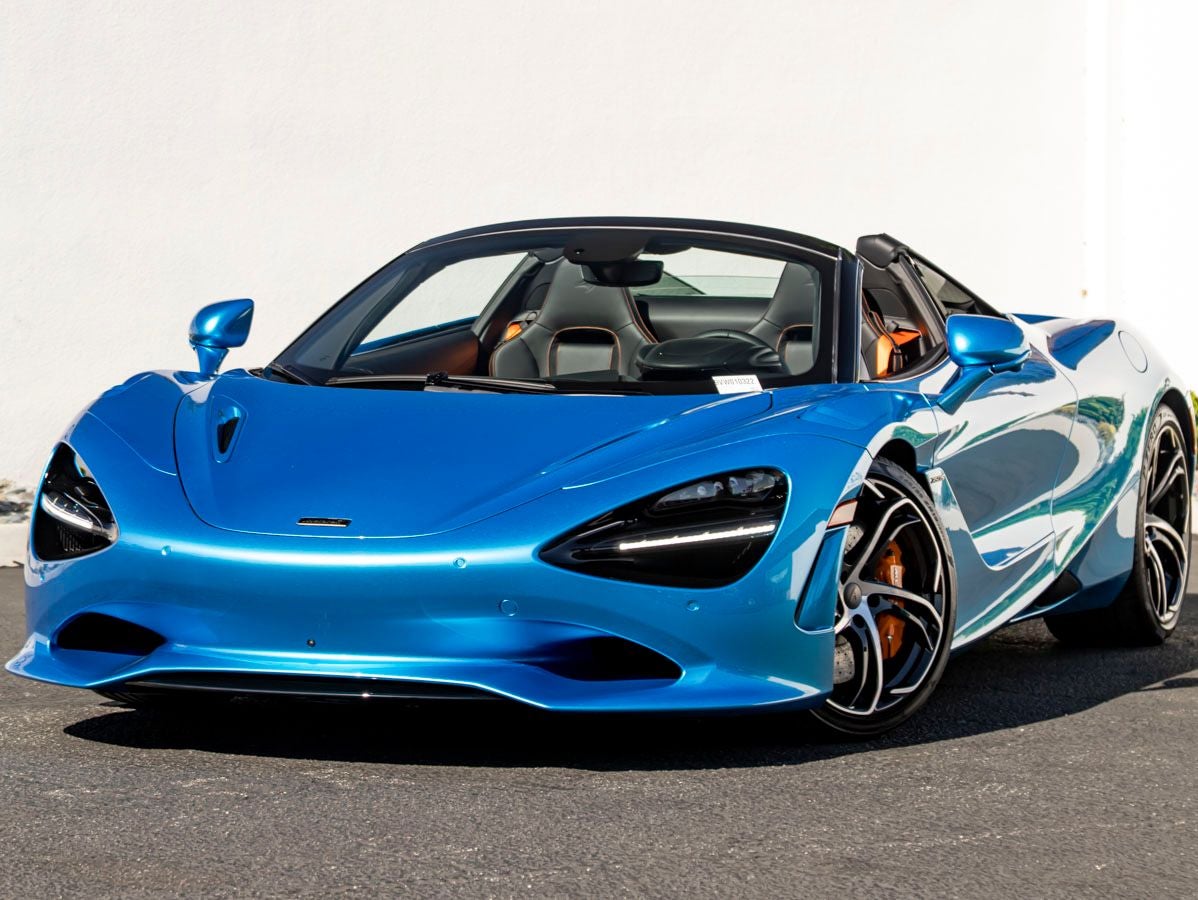
The Demotion Paradox: Why McLaren's 1,258-HP W1 Might Not Be 'Hyper' Enough
As the McLaren W1 debuts with record-breaking power, it enters a world where thousand-horsepower EVs are commonplace and even manufacturers strategically downgrade their own creations. What does it mean to be a hypercar when the definition itself is up for grabs?
As McLaren prepares to unleash its 1,258-horsepower W1, a successor to the legendary P1, it faces a peculiar crisis of nomenclature. A decade ago, such a figure would have been the undisputed territory of a 'hypercar', that rarefied class above mere supercars. But in a landscape where family sedans from EV startups approach four-figure horsepower, the lines have blurred more than ever. The question, as posed by a recent MotorTrend investigation into the very meaning of these terms, isn't just academic; it cuts to the core of what makes a car truly elite when raw power, the traditional metric of dominance, is becoming democratized.As McLaren prepares to unleash its 1,258-horsepower W1, a successor to the legendary P1, it faces a peculiar crisis of nomenclature. A decade ago, such a figure would have been the undisputed territory of a 'hypercar', that rarefied class above mere supercars. But in a landscape where family sedans from EV startups approach four-figure horsepower, the lines have blurred more than ever. The question, as posed by a recent MotorTrend investigation into the very meaning of these terms, isn't just academic; it cuts to the core of what makes a car truly elite when raw power, the traditional metric of dominance, is becoming democratized.
This definitional drift is not just a matter of perspective; it’s a deliberate marketing strategy. Look no further than Aston Martin, which, as MotorTrend's Mac Morrison noted, is cheekily branding its new 1,064-horsepower Valhalla as a 'lowly supercar.' This isn't newfound modesty. It’s a calculated move to protect the halo status of its even more extreme Valkyrie hypercar and avoid alienating its top-tier clientele. The problem is compounded when brands like General Motors are, as the same report puts it, 'hella quick' to position a 1,250-hp Corvette ZR1X in hypercar territory, challenging the established European hierarchy that the P1 helped pioneer as one of the original 'Holy Trinity' hypercars.This definitional drift is not just a matter of perspective; it’s a deliberate marketing strategy. Look no further than Aston Martin, which, as MotorTrend's Mac Morrison noted, is cheekily branding its new 1,064-horsepower Valhalla as a 'lowly supercar.' This isn't newfound modesty. It’s a calculated move to protect the halo status of its even more extreme Valkyrie hypercar and avoid alienating its top-tier clientele. The problem is compounded when brands like General Motors are, as the same report puts it, 'hella quick' to position a 1,250-hp Corvette ZR1X in hypercar territory, challenging the established European hierarchy that the P1 helped pioneer as one of the original 'Holy Trinity' hypercars.
The obsession with peak numbers is being questioned even at the pinnacle of motorsport. The FIA’s 2026 Formula 1 regulations are a case in point, mandating cars with 55% less drag and 30% less downforce—a conscious step back from raw statistical supremacy in favor of improving the on-track product by allowing closer racing. This mirrors a fracture in the high-end automotive market, where brands like Ferrari are filing trademarks that signal a continued commitment to track-focused, naturally aspirated V12 grand tourers. It suggests a pivot toward valuing the analog experience and engineering purity over the kilowatt arms race, a realm where numbers on a spec sheet tell only part of the story.
So where does this leave the W1? It arrives as the spiritual heir to the McLaren P1, a car that once defined the category alongside the LaFerrari and Porsche 918. Yet the W1 will be judged in a new context, where its staggering horsepower may not be its most important feature. With market-watchers noting the volatile depreciation of complex modern hybrids, the W1's ultimate legacy may rest not on its ability to top a leaderboard, but on whether its driving experience and engineering can justify its place in the pantheon, proving it’s more than just a number in an increasingly crowded field.So where does this leave the W1? It arrives as the spiritual heir to the McLaren P1, a car that once defined the category alongside the LaFerrari and Porsche 918. Yet the W1 will be judged in a new context, where its staggering horsepower may not be its most important feature. With market-watchers noting the volatile depreciation of complex modern hybrids, the W1's ultimate legacy may rest not on its ability to top a leaderboard, but on whether its driving experience and engineering can justify its place in the pantheon, proving it’s more than just a number in an increasingly crowded field.
Gallery
"Aston Martin is calling its 1,064-horsepower, mid-engine monster... just a lowly supercar."
Why it matters
The hypercar category, once defined by clear performance benchmarks like horsepower, is becoming a fluid marketing term. This reflects a larger shift in automotive culture where raw output is being commoditized by EVs, forcing elite brands to redefine value around engineering, driver experience, and heritage. The W1 is a test case for this new reality, questioning what 'elite' really means when the numbers are no longer enough.
Sources
- 1.
- 2.
- 3.Supercar vs. Hypercar: What Do These Terms Even Mean ...motortrend.com
- 4.
- 5.What these cars should costinstagram.com
- 6.
- 7.
Reported by the Downforce & Divots desk from the sources above.
The clubhouse.
- No replies yet. Be the first.