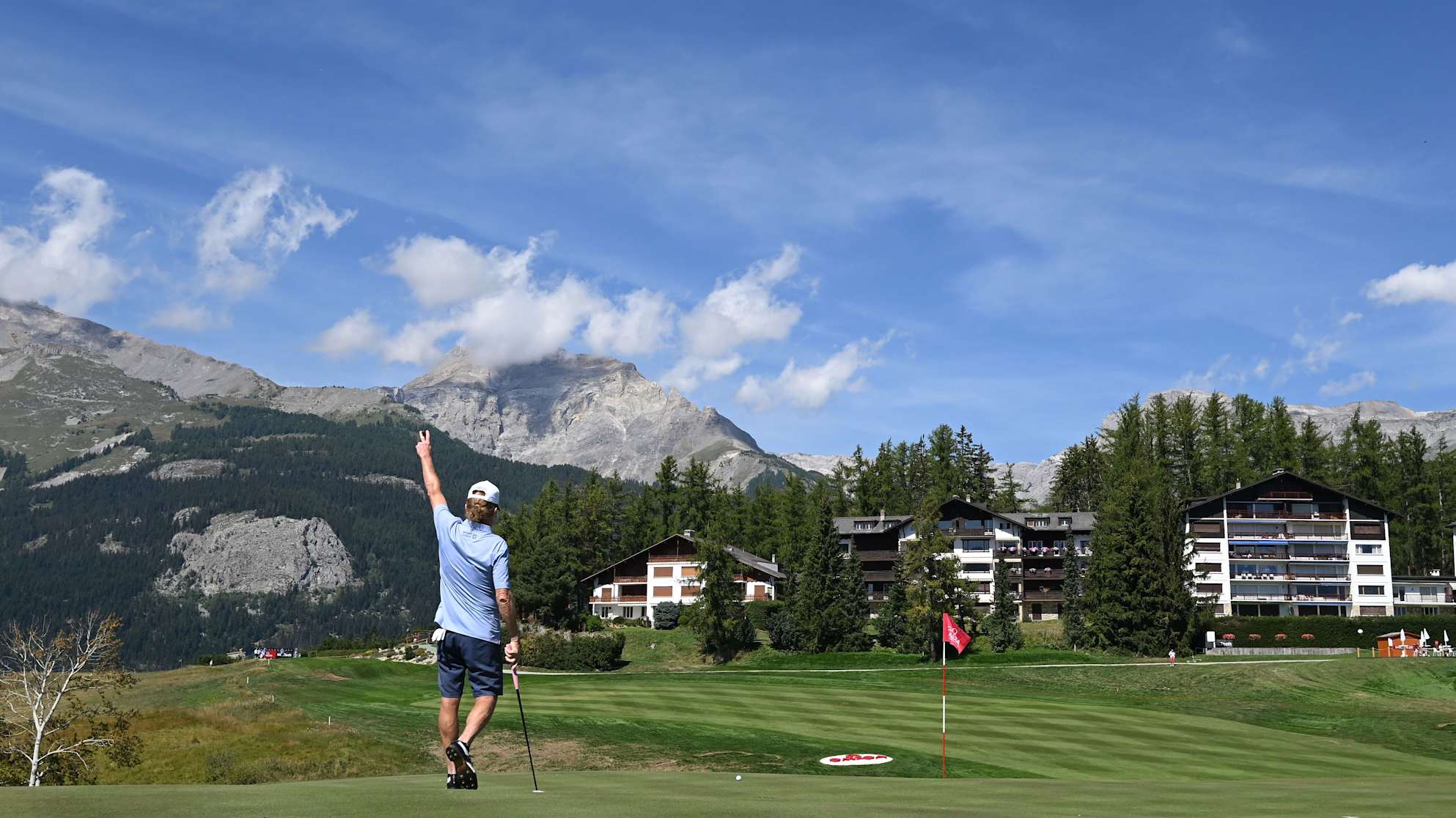
The Crans Illusion: Why Beating Tour Pros on One Hole Means Absolutely Nothing
A 12-year-old's viral triumph on the 8th hole at Crans-sur-Sierre highlights the widening chasm between isolated execution and tournament grit.
The spectacle was tailor-made for the modern highlight reel: a twelve-year-old carrying a four handicap stepping onto the tee at Crans-sur-Sierre’s 8th hole and casually sticking a ball closer to the pin than a field of seasoned touring professionals. The gallery roared, the cameras zoomed in on the grin, and social media predictably launched into its standard chorus declaring the arrival of the next generational prodigy. It was charming theatre, but it also laid bare the great optical illusion of contemporary golf.The spectacle was tailor-made for the modern highlight reel: a twelve-year-old carrying a four handicap stepping onto the tee at Crans-sur-Sierre’s 8th hole and casually sticking a ball closer to the pin than a field of seasoned touring professionals. The gallery roared, the cameras zoomed in on the grin, and social media predictably launched into its standard chorus declaring the arrival of the next generational prodigy. It was charming theatre, but it also laid bare the great optical illusion of contemporary golf.
The modern junior ecosystem, anchored heavily by the Drive, Chip & Putt industrial complex, has perfected the art of sterile, repetitive mechanics. In those structured formats, a young player is asked to execute a single, highly rehearsed movement in vacuum-sealed conditions. There is no contextual weight, no cumulative fatigue, and no scar tissue from a four-putt on the preceding green. When you isolate the 8th hole in the Swiss Alps down to a standalone target challenge, pure execution can occasionally triumph over pedigree.The modern junior ecosystem, anchored heavily by the Drive, Chip & Putt industrial complex, has perfected the art of sterile, repetitive mechanics. In those structured formats, a young player is asked to execute a single, highly rehearsed movement in vacuum-sealed conditions. There is no contextual weight, no cumulative fatigue, and no scar tissue from a four-putt on the preceding green. When you isolate the 8th hole in the Swiss Alps down to a standalone target challenge, pure execution can occasionally triumph over pedigree.
That is precisely where the divide opens. Junior golfers who dominate skills challenges often find the transition to legitimate multi-day tournament golf jarringly brutal. A stationary target test rewards a frictionless swing path; a 72-hole championship tests whether that swing path can survive shifting crosswinds, buried lies in penal rough, and the psychological corrosion of protecting a one-shot lead on Sunday afternoon.That is precisely where the divide opens. Junior golfers who dominate skills challenges often find the transition to legitimate multi-day tournament golf jarringly brutal. A stationary target test rewards a frictionless swing path; a 72-hole championship tests whether that swing path can survive shifting crosswinds, buried lies in penal rough, and the psychological corrosion of protecting a one-shot lead on Sunday afternoon.
On a single par 3 at Crans-Montana, a four-handicap child with elite hand-eye coordination has nothing to lose. The tour pro, by contrast, carries the neurological baggage of a livelihood measured in fractions of a stroke and FedEx Cup points. The professional’s swing is engineered not merely to produce one aesthetic dart for the gallery, but to withstand seventy-two holes of variance without catastrophically breaking down under pressure.On a single par 3 at Crans-Montana, a four-handicap child with elite hand-eye coordination has nothing to lose. The tour pro, by contrast, carries the neurological baggage of a livelihood measured in fractions of a stroke and FedEx Cup points. The professional’s swing is engineered not merely to produce one aesthetic dart for the gallery, but to withstand seventy-two holes of variance without catastrophically breaking down under pressure.
Watching a pre-teen out-strike the European elite on an exhibition tee box is delightful entertainment, but mistaking it for competitive parity misunderstands the very essence of elite golf. Target accuracy on command is a party trick; navigating four rounds through tactical discipline, course management, and mental resilience is the actual sport.Watching a pre-teen out-strike the European elite on an exhibition tee box is delightful entertainment, but mistaking it for competitive parity misunderstands the very essence of elite golf. Target accuracy on command is a party trick; navigating four rounds through tactical discipline, course management, and mental resilience is the actual sport.
Gallery
"DC&P is pure execution over a relatively isolated shot, which is why juniors can shine there without winning tournaments."
Why it matters
The viral display at Crans-sur-Sierre exposes the fundamental difference between modern skills-challenge coaching and the psychological resilience demanded by 72-hole competitive golf. As junior development increasingly mirrors isolated target drills, translating raw mechanics into tournament trophies remains golf's ultimate hurdle.
Sources
- 1.
- 2.Scottie Scheffler would trade his season for Wyndham Clark'sgolfchannel.com
- 3.
- 4.
Reported by the Downforce & Divots desk from the sources above.
The clubhouse.
- No replies yet. Be the first.