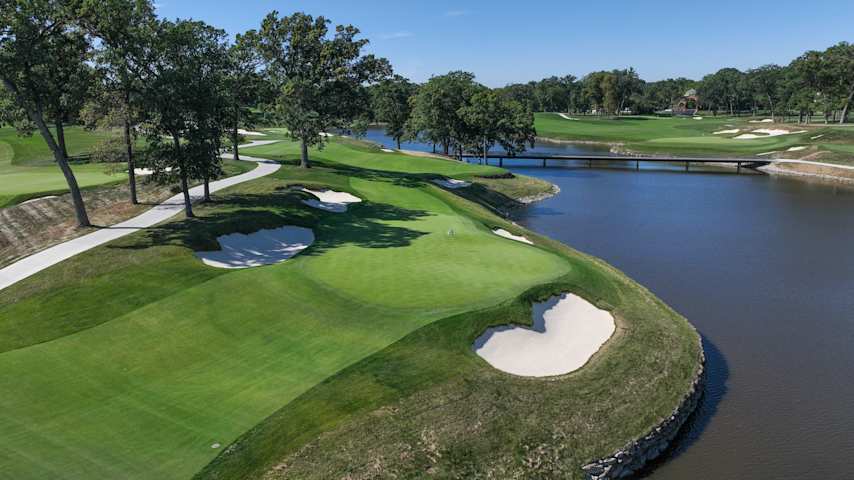
The Chicago Guillotine: Inside the Radical Rebirth of Medinah No. 3
Ahead of the 2026 Presidents Cup, one of America’s most storied major championship venues strips away decades of tree-lined claustrophobia in search of modern architectural bite.
For decades, Medinah Country Club’s No. 3 course was defined by a singular, suffocating ethos: claustrophobic corridors, dense Midwestern timber, and an unyielding demand for aerial brute force. The layout that staged U.S. Opens, PGA Championships, and the haunting theater of the 2012 Ryder Cup was long overdue for an architectural reckoning. Ahead of hosting the 2026 Presidents Cup, the Chicago titan has finally completed the most sweeping, radical transformation in its storied century-old history.For decades, Medinah Country Club’s No. 3 course was defined by a singular, suffocating ethos: claustrophobic corridors, dense Midwestern timber, and an unyielding demand for aerial brute force. The layout that staged U.S. Opens, PGA Championships, and the haunting theater of the 2012 Ryder Cup was long overdue for an architectural reckoning. Ahead of hosting the 2026 Presidents Cup, the Chicago titan has finally completed the most sweeping, radical transformation in its storied century-old history.
The overhaul dismantles the mid-century penal archetype that had slowly turned Medinah into a one-dimensional slugger’s park. As detailed in Golf Digest’s architectural breakdown, the project began with a relentless timber campaign, clearing out hundreds of mature trees to reintroduce lost sightlines, restore natural airflow, and expand previously choked playing corridors across the entire property.The overhaul dismantles the mid-century penal archetype that had slowly turned Medinah into a one-dimensional slugger’s park. As detailed in Golf Digest’s architectural breakdown, the project began with a relentless timber campaign, clearing out hundreds of mature trees to reintroduce lost sightlines, restore natural airflow, and expand previously choked playing corridors across the entire property.
This was not cosmetic trimming; it was a comprehensive structural redesign. By ripping away the canopy that dictated shot shapes off nearly every tee box, the architects have reintroduced width as a strategic weapon. Fairways now connect directly to recontoured green complexes, replacing predictable aerial target practice with firm, fast-running ground game options and perilous runoff zones.This was not cosmetic trimming; it was a comprehensive structural redesign. By ripping away the canopy that dictated shot shapes off nearly every tee box, the architects have reintroduced width as a strategic weapon. Fairways now connect directly to recontoured green complexes, replacing predictable aerial target practice with firm, fast-running ground game options and perilous runoff zones.
The shift completely recasts who the iconic venue will favor when match play arrives. Historically, Medinah rewarded high-launch, one-dimensional power hitters who could fly the tree lines and hold soft greens. Under the re-engineered layout, players face aggressive risk-reward angles where taking aggressive lines shortens approaches but brings shaved false fronts and newly exposed hazards squarely into view.The shift completely recasts who the iconic venue will favor when match play arrives. Historically, Medinah rewarded high-launch, one-dimensional power hitters who could fly the tree lines and hold soft greens. Under the re-engineered layout, players face aggressive risk-reward angles where taking aggressive lines shortens approaches but brings shaved false fronts and newly exposed hazards squarely into view.
The physical surgery represents a broader philosophical shift sweeping classic American championship venues. Instead of stretching yardages beyond 7,800 yards to defend against modern ball speeds, Medinah’s new blueprint relies on strategic contouring, green complex variety, and calculated angles to expose technical and tactical indecision under tournament pressure.The physical surgery represents a broader philosophical shift sweeping classic American championship venues. Instead of stretching yardages beyond 7,800 yards to defend against modern ball speeds, Medinah’s new blueprint relies on strategic contouring, green complex variety, and calculated angles to expose technical and tactical indecision under tournament pressure.
When international team golf returns to Chicago in 2026, spectators will encounter a No. 3 course that looks and plays almost nothing like the bunker-and-bough fortress of 2012. Medinah has traded suffocating tree corridors for an expansive, architectural battleground built to test every club in the modern bag.When international team golf returns to Chicago in 2026, spectators will encounter a No. 3 course that looks and plays almost nothing like the bunker-and-bough fortress of 2012. Medinah has traded suffocating tree corridors for an expansive, architectural battleground built to test every club in the modern bag.
Gallery
"Medinah No. 3 has undergone one of the most dramatic golf course transformations in its history."
Why it matters
Medinah No. 3’s overhaul moves one of golf's most historic major championship venues away from obsolete, one-dimensional length toward modern strategic width. How the redesigned layout tests the world's elite in 2026 will set the benchmark for classic parkland renovations across the championship calendar.
Sources
- 1.
- 2.Who will Medinah favor? AO goes inside redesigned layoutgolfchannel.com
- 3.
- 4.
Reported by the Downforce & Divots desk from the sources above.
The clubhouse.
- No replies yet. Be the first.