Cold Comfort: How Bugatti Forged a 1,578-HP Hypercar With a Heart of Porcelain
The one-off Bugatti W16 Mistral 'Blanc Éternel' features structural components made from a material famous for its fragility. A deep dive into the science of advanced composites and a 15-year partnership with KPM Berlin reveals how delicate porcelain can withstand the fury of Bugatti’s final W16 masterpiece.
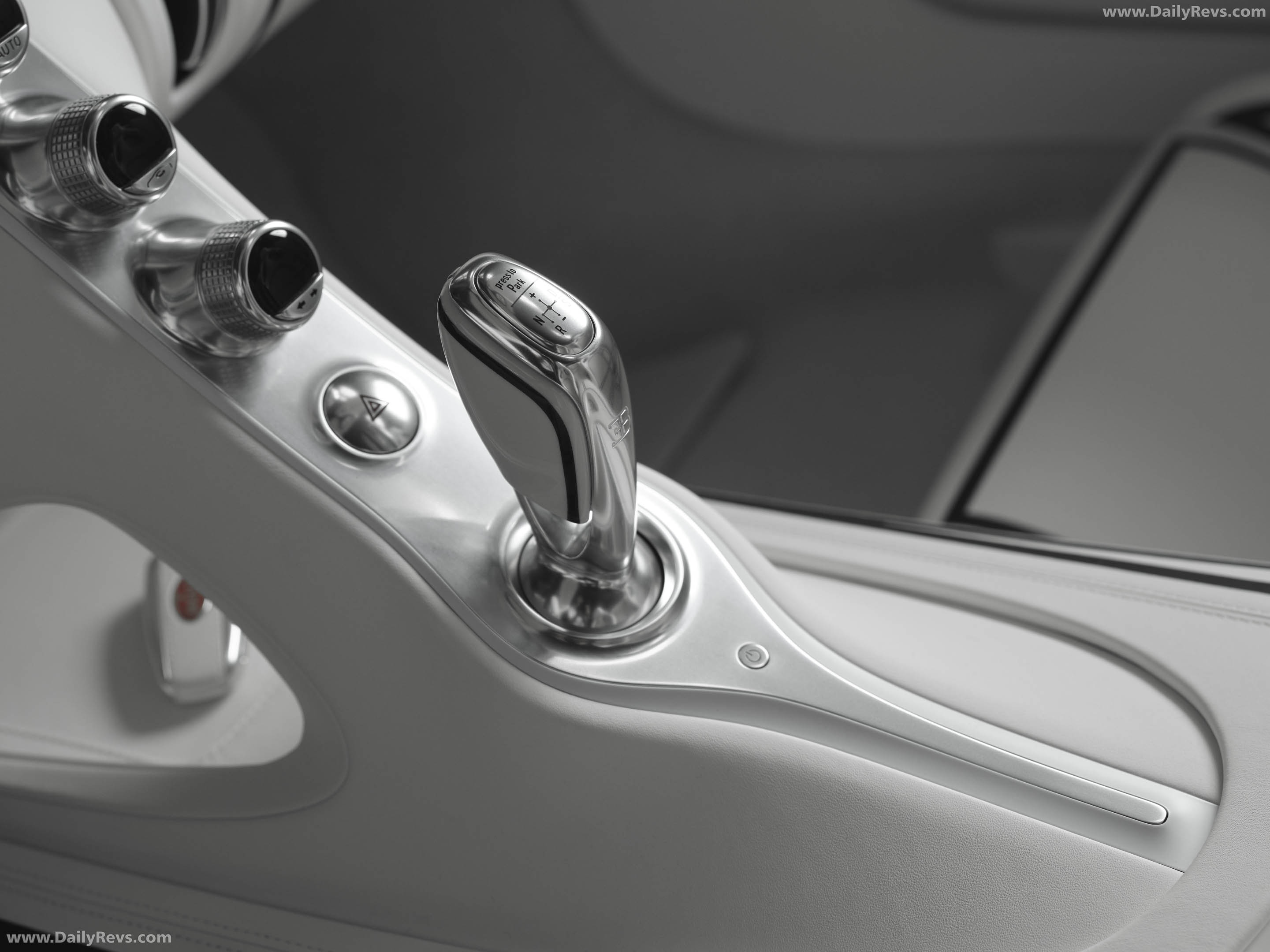
At the heart of the latest one-off Bugatti, the W16 Mistral ‘Blanc Éternel,’ sits an object of profound contradiction: a gear selector crafted from pure, cool-to-the-touch porcelain. Flanked by matching handcrafted inlays on the center console and headrests, these elements are the product of the Königliche Porzellan-Manufaktur (KPM) Berlin, a workshop where precision craftsmanship has, as one account notes, 'endured for centuries.' This isn't just an ornamental flourish. It’s a structural component at the epicenter of a machine generating 1,578 horsepower, subject to constant, violent vibration and torsional stress. In an automotive world defined by carbon fiber and titanium, Bugatti has deliberately placed a material synonymous with fragility into the cockpit of its ultimate roadster. The immediate question isn’t just ‘why?’, but ‘how?’. How does something so delicate survive where even metals can fail?At the heart of the latest one-off Bugatti, the W16 Mistral ‘Blanc Éternel,’ sits an object of profound contradiction: a gear selector crafted from pure, cool-to-the-touch porcelain. Flanked by matching handcrafted inlays on the center console and headrests, these elements are the product of the Königliche Porzellan-Manufaktur (KPM) Berlin, a workshop where precision craftsmanship has, as one account notes, 'endured for centuries.' This isn't just an ornamental flourish. It’s a structural component at the epicenter of a machine generating 1,578 horsepower, subject to constant, violent vibration and torsional stress. In an automotive world defined by carbon fiber and titanium, Bugatti has deliberately placed a material synonymous with fragility into the cockpit of its ultimate roadster. The immediate question isn’t just ‘why?’, but ‘how?’. How does something so delicate survive where even metals can fail?
This audacious fusion of high art and high performance is not without precedent. As Bugatti’s own archives recall, it was fifteen years ago to the day that the Molsheim atelier first partnered with KPM Berlin on a project that, at the time, seemed impossible. The result was the Bugatti Veyron Grand Sport 'L'Or Blanc,' a one-of-a-kind creation that, as one publication aptly put it, became the 'fastest porcelain in the world.' That pioneering vehicle established the core principle, replacing conventional applied trim with intricate, hand-painted lines of royal Dark Blue paint directly onto the bodywork, turning the car itself into a porcelain-inspired canvas. The 'L'Or Blanc' was the proof of concept, a demonstration that the two disparate worlds of hyper-performance engineering and centuries-old ceramic art could not only coexist, but create something entirely new. The ‘Blanc Éternel’ is the perfection of that idea.This audacious fusion of high art and high performance is not without precedent. As Bugatti’s own archives recall, it was fifteen years ago to the day that the Molsheim atelier first partnered with KPM Berlin on a project that, at the time, seemed impossible. The result was the Bugatti Veyron Grand Sport 'L'Or Blanc,' a one-of-a-kind creation that, as one publication aptly put it, became the 'fastest porcelain in the world.' That pioneering vehicle established the core principle, replacing conventional applied trim with intricate, hand-painted lines of royal Dark Blue paint directly onto the bodywork, turning the car itself into a porcelain-inspired canvas. The 'L'Or Blanc' was the proof of concept, a demonstration that the two disparate worlds of hyper-performance engineering and centuries-old ceramic art could not only coexist, but create something entirely new. The ‘Blanc Éternel’ is the perfection of that idea.
The new Mistral is a far more integrated and profound exploration of the theme. Its very name, ‘Blanc Éternel,’ is a carefully chosen double entendre, evoking, in Bugatti’s words, 'both the perpetual beauty of pure-white porcelain, and the enduring place of the W16 within Bugatti history.' The car’s aesthetic is a 'beautiful dance of design and duality,' most vividly expressed through the delicate, hand-painted black lines that trace the contours of its bodywork. These are not random pinstripes. According to the official release, they make visible the 'digital patch layout'—the invisible mesh of polygons that forms the foundational geometry of every modern car in a computer-aided design environment. It’s a startlingly intellectual concept: using the hand of a master artisan from a centuries-old workshop to reveal the hidden digital skeleton of a 21st-century hypercar, rendering the machine's computational soul in physical form.The new Mistral is a far more integrated and profound exploration of the theme. Its very name, ‘Blanc Éternel,’ is a carefully chosen double entendre, evoking, in Bugatti’s words, 'both the perpetual beauty of pure-white porcelain, and the enduring place of the W16 within Bugatti history.' The car’s aesthetic is a 'beautiful dance of design and duality,' most vividly expressed through the delicate, hand-painted black lines that trace the contours of its bodywork. These are not random pinstripes. According to the official release, they make visible the 'digital patch layout'—the invisible mesh of polygons that forms the foundational geometry of every modern car in a computer-aided design environment. It’s a startlingly intellectual concept: using the hand of a master artisan from a centuries-old workshop to reveal the hidden digital skeleton of a 21st-century hypercar, rendering the machine's computational soul in physical form.
The partnership itself marries the apex of digital design with the pinnacle of analog craft. Bugatti’s statement on the collaboration emphasizes this synergy, framing it as a project that 'combines the precision of digital design with the craftsmanship and porcelain expertise of KPM Berlin.' The porcelain elements are not mass-produced; they are shaped and refined by hand in KPM’s historic Berlin workshops. This painstaking process imbues the Mistral with a tangible connection to a legacy of artistry stretching back centuries, creating a sense of permanence and pedigree that a 3D-printed or machined aluminum component simply cannot replicate. Each piece is a testament to KPM's enduring precision, bringing a human touch to a vehicle that represents the absolute extreme of mechanical performance.The partnership itself marries the apex of digital design with the pinnacle of analog craft. Bugatti’s statement on the collaboration emphasizes this synergy, framing it as a project that 'combines the precision of digital design with the craftsmanship and porcelain expertise of KPM Berlin.' The porcelain elements are not mass-produced; they are shaped and refined by hand in KPM’s historic Berlin workshops. This painstaking process imbues the Mistral with a tangible connection to a legacy of artistry stretching back centuries, creating a sense of permanence and pedigree that a 3D-printed or machined aluminum component simply cannot replicate. Each piece is a testament to KPM's enduring precision, bringing a human touch to a vehicle that represents the absolute extreme of mechanical performance.
The survival of these ceramic pieces is not a matter of luck, but of advanced material science. A recent critical review published in *Next Materials* on ceramic matrix composites provides the scientific context: the incredible durability comes from understanding the 'structure-interface-performance relationships' that govern modern composite behavior. The KPM components are not simply fired clay; they are almost certainly advanced ceramic composites, where ceramic fillers are embedded within a strengthening polymer or metal matrix. This process radically alters the material's properties, mitigating the inherent brittleness of traditional porcelain and granting it immense resistance to thermal shock and mechanical stress. This is the same fundamental principle that gives carbon-ceramic brake discs their legendary performance, allowing them to absorb enormous heat and operate effectively at temperatures well over 700°C, a point where conventional iron discs would warp, fade, and catastrophically fail.The survival of these ceramic pieces is not a matter of luck, but of advanced material science. A recent critical review published in *Next Materials* on ceramic matrix composites provides the scientific context: the incredible durability comes from understanding the 'structure-interface-performance relationships' that govern modern composite behavior. The KPM components are not simply fired clay; they are almost certainly advanced ceramic composites, where ceramic fillers are embedded within a strengthening polymer or metal matrix. This process radically alters the material's properties, mitigating the inherent brittleness of traditional porcelain and granting it immense resistance to thermal shock and mechanical stress. This is the same fundamental principle that gives carbon-ceramic brake discs their legendary performance, allowing them to absorb enormous heat and operate effectively at temperatures well over 700°C, a point where conventional iron discs would warp, fade, and catastrophically fail.
Beyond the chemistry of the material itself is the science of its application. Fixing a rigid object to a chassis that flexes and vibrates under immense power is a recipe for fracture. The solution, as highlighted by innovations in industrial materials, lies in 'flexible adhesion.' Rather than a simple epoxy, the KPM porcelain components are almost certainly mounted using a sophisticated 'polymer modified adhesive,' likely a 'fiber reinforced' compound. Such an adhesive creates a strong bond that retains a degree of elasticity. This allows the porcelain to effectively 'float' on a microscopic level, isolating it from the harshest vibrations and torsional loads of the Mistral’s monocoque. The bond is engineered to absorb and dissipate energy, ensuring the destructive forces generated by the W16 engine are managed by the adhesive interface, not the porcelain itself.Beyond the chemistry of the material itself is the science of its application. Fixing a rigid object to a chassis that flexes and vibrates under immense power is a recipe for fracture. The solution, as highlighted by innovations in industrial materials, lies in 'flexible adhesion.' Rather than a simple epoxy, the KPM porcelain components are almost certainly mounted using a sophisticated 'polymer modified adhesive,' likely a 'fiber reinforced' compound. Such an adhesive creates a strong bond that retains a degree of elasticity. This allows the porcelain to effectively 'float' on a microscopic level, isolating it from the harshest vibrations and torsional loads of the Mistral’s monocoque. The bond is engineered to absorb and dissipate energy, ensuring the destructive forces generated by the W16 engine are managed by the adhesive interface, not the porcelain itself.
In the rarefied air of the hypercar market, this level of bespoke detailing and material innovation is the ultimate currency. While brands like Ferrari invite prospective owners to dive 'beneath the carbon-fiber skin' of concepts like the F80 to appreciate its state-of-the-art technologies, and Koenigsegg has redefined an entire category with its 1,700-horsepower 'Mega-GT' Gemera, Bugatti has charted a different, yet equally compelling, path. The use of KPM porcelain transcends mere material choice; it is a statement of identity. In an arms race dominated by horsepower figures and ever-lighter composites, Bugatti's Sur Mesure program asserts that true exclusivity lies in the audacious integration of art and craft at a level its rivals cannot match.In the rarefied air of the hypercar market, this level of bespoke detailing and material innovation is the ultimate currency. While brands like Ferrari invite prospective owners to dive 'beneath the carbon-fiber skin' of concepts like the F80 to appreciate its state-of-the-art technologies, and Koenigsegg has redefined an entire category with its 1,700-horsepower 'Mega-GT' Gemera, Bugatti has charted a different, yet equally compelling, path. The use of KPM porcelain transcends mere material choice; it is a statement of identity. In an arms race dominated by horsepower figures and ever-lighter composites, Bugatti's Sur Mesure program asserts that true exclusivity lies in the audacious integration of art and craft at a level its rivals cannot match.
Ultimately, the W16 Mistral 'Blanc Éternel' is more than a stunning one-off; it is the capstone on the legacy of the W16 engine, a final, poetic statement from Molsheim. The renewed partnership with KPM Berlin demonstrates that the frontier of automotive performance is no longer just about raw speed or power, but about the imaginative and daring fusion of engineering, technology, and pure artistry. By successfully incorporating a material known for its fragility into one of the most mechanically intense environments on earth, Bugatti has expanded the very definition of a 'performance material.' As the automotive world prepares for its next era, the ‘Blanc Éternel’ will stand as a monument not just to a legendary engine, but to the idea that the most profound expressions of beauty and strength can be one and the same.Ultimately, the W16 Mistral 'Blanc Éternel' is more than a stunning one-off; it is the capstone on the legacy of the W16 engine, a final, poetic statement from Molsheim. The renewed partnership with KPM Berlin demonstrates that the frontier of automotive performance is no longer just about raw speed or power, but about the imaginative and daring fusion of engineering, technology, and pure artistry. By successfully incorporating a material known for its fragility into one of the most mechanically intense environments on earth, Bugatti has expanded the very definition of a 'performance material.' As the automotive world prepares for its next era, the ‘Blanc Éternel’ will stand as a monument not just to a legendary engine, but to the idea that the most profound expressions of beauty and strength can be one and the same.
Gallery
"The L'Or Blanc became the fastest porcelain in the world."
Why it matters
The Mistral 'Blanc Éternel' pushes the boundary of automotive materials, using advanced composite technology and flexible adhesives to integrate artisanal porcelain into a high-vibration, high-stress hypercar environment. This redefines what 'luxury materials' can mean in the context of extreme performance, setting a new benchmark for bespoke craftsmanship against rivals like Koenigsegg and Ferrari.
Sources
- 1.
- 2.
- 3.
- 4.
- 5.
- 6.
- 7.
- 8.The W16 Mistral 'Blanc Éternel': Celebrating PERPETUAL BEAUTYnewsroom.bugatti.com
- 9.
- 10.
Reported by the Downforce & Divots desk from the sources above.
The clubhouse.
- No replies yet. Be the first.