The Ghost in the Machine: How Aaron Rai's Racing Past Forged a PGA Champion
His PGA Championship win was a surprise, but the secret to Aaron Rai's success might lie not at the range, but in the karting circuits of his youth. A deep dive into the meticulously precise habits of golf’s newest major winner.
It’s a curious image: golf’s newest major champion, a man who honed his craft at a dinosaur-themed crazy golf course, playing with two gloves. While most pros sacrifice a second glove to maintain a delicate sense of touch, Aaron Rai’s unorthodox method points to a different priority. For Rai, who once dreamed of becoming a Formula 1 driver before dedicating his life to golf, the setup seems less about feel and more about control—a systematic elimination of variables. The potential loss of touch, a dealbreaker for many golfers, is a calculated trade-off for the superior grip and repeatable mechanics that his full-swing system is built on, a first clue to a mindset forged not on the fairway, but in the cockpit.
This isn’t just a stylistic quirk; it’s a philosophy of precision that pays dividends. Rai’s entire approach is built on a foundation of ruthless accuracy, a standout trait in an era of bomb-and-gouge. His game plan, which saw him triumph at Aronimink, is anchored by a staggering statistic: a 70% driving accuracy rate that places him in the top five on the PGA Tour. This is the competitive engine of a player described as a “fierce competitor,” one who sticks to his game plan without deviation. He isn't overpowering opponents; he's out-systematizing them with the discipline of a race engineer, where minute, repeatable inputs are the difference between winning and losing.
This brand of relentless, systematic dominance is echoing across the highest levels of sport. Look at men's tennis, where Jannik Sinner has constructed a season of near-perfect efficiency, becoming the youngest man to complete the “Career Golden Masters” by winning all nine ATP 1000 events. His staggering 34-match winning streak at the Masters level evokes the historic dominance of John McEnroe’s 1984 campaign, built not on momentary flashes of brilliance but on an unbreachable foundation of consistency. Like Sinner, Rai represents a modern archetype: the athlete as a high-performance system, where a psychological process honed in one discipline can be transferred, perfected, and ultimately used to conquer another.
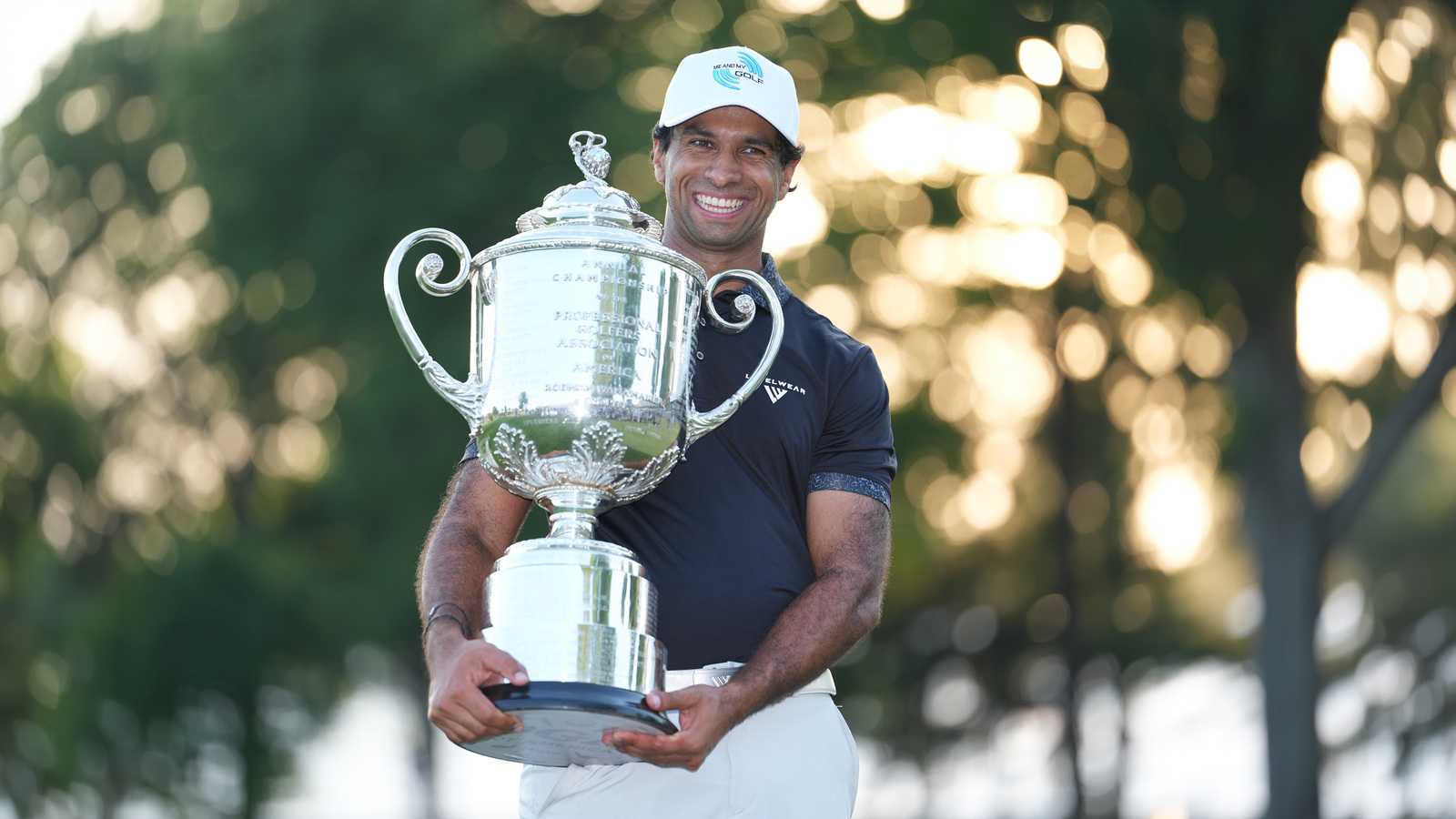


"Aaron Rai stuck to his game, which is 70% accuracy off the tee, a top five stat on the PGA tour. That's his strength. He played it."
Aaron Rai's victory is more than a golf story; it's a compelling case study in skill transfer from the high-stakes world of motorsport. His success challenges the feel-based conventions of golf, suggesting a new blueprint for champions built on data-driven consistency and uncompromising psychological rigor. It proves a mindset obsessed with precision can find a way to win, no matter the arena.
- 1.
- 2.
- 3.
- 4.
- 5.
- 6.
- 7.
- 8.
- 9.
- 10.
Reported by the Downforce & Divots desk from the sources above.
The clubhouse.
- No replies yet. Be the first.