Hyundai's Ergonomic Gambit: Why the 2027 Tucson's Radical Cockpit Is Smarter Than It Looks
New spy photos reveal the next-gen Tucson is nuking a decade of successful interior design for a massive screen and an AI. But the smartest feature might be the one they're keeping.
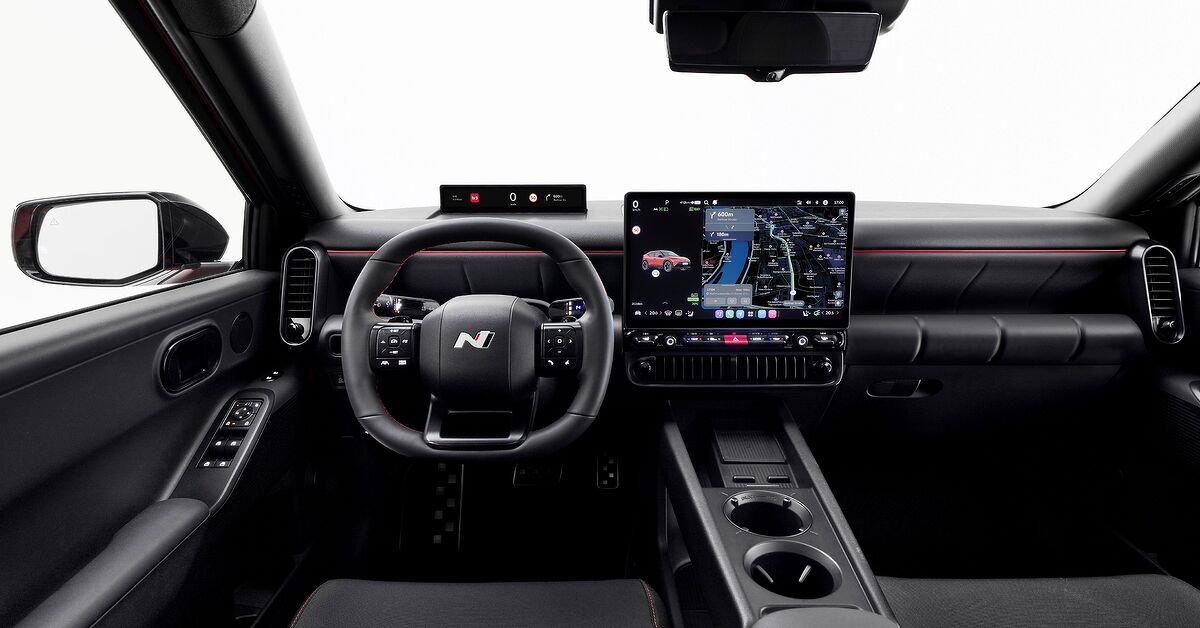
You don’t just casually abandon a winning formula. For nearly a decade, Hyundai has honed a driver-focused cockpit that became a benchmark for ergonomic sanity. Yet, recent spy photos of the 2027 Tucson reveal a cabin that fundamentally breaks from those habits, signaling a hard pivot in the company’s philosophy. The centerpiece of this revolution, as seen in leaked images, is a massive central screen that dominates a minimalist dashboard, flanked by a new steering wheel and redesigned door panels. The entire aesthetic is a stark departure, raising the question of why Hyundai would risk alienating a loyal customer base by changing the one thing that arguably needed no fixing.You don’t just casually abandon a winning formula. For nearly a decade, Hyundai has honed a driver-focused cockpit that became a benchmark for ergonomic sanity. Yet, recent spy photos of the 2027 Tucson reveal a cabin that fundamentally breaks from those habits, signaling a hard pivot in the company’s philosophy. The centerpiece of this revolution, as seen in leaked images, is a massive central screen that dominates a minimalist dashboard, flanked by a new steering wheel and redesigned door panels. The entire aesthetic is a stark departure, raising the question of why Hyundai would risk alienating a loyal customer base by changing the one thing that arguably needed no fixing.
This isn't just a bigger screen; it's a ground-up rethink of the human-machine interface. The new Tucson is set to debut Hyundai's 'Pleos Connect' infotainment system, running on a proprietary 'Pleos OS' and featuring a 'Gleo AI' assistant, according to reports from The Korean Car Blog. This tech-heavy layout, which includes a rumored 17-inch central touchscreen, is the interior counterpart to the exterior’s new design language, which ditches the current model's flowing “Sensuous Sportiness” for a rugged, chiseled aesthetic inspired by the new Santa Fe. But the most telling detail from the spy shots is what remains: physical buttons and knobs for core functions. In an era where competitors are backtracking from screen-only interfaces, Hyundai is making a calculated bet on a hybrid approach.This isn't just a bigger screen; it's a ground-up rethink of the human-machine interface. The new Tucson is set to debut Hyundai's 'Pleos Connect' infotainment system, running on a proprietary 'Pleos OS' and featuring a 'Gleo AI' assistant, according to reports from The Korean Car Blog. This tech-heavy layout, which includes a rumored 17-inch central touchscreen, is the interior counterpart to the exterior’s new design language, which ditches the current model's flowing “Sensuous Sportiness” for a rugged, chiseled aesthetic inspired by the new Santa Fe. But the most telling detail from the spy shots is what remains: physical buttons and knobs for core functions. In an era where competitors are backtracking from screen-only interfaces, Hyundai is making a calculated bet on a hybrid approach.
This move firmly plants Hyundai’s flag as a feature-led aggressor in a cutthroat market. While rivals in markets like India, for example, have been forced to compete on vectors like safety or pure price point, Hyundai has consistently won by delivering more, and better, tech. The new Tucson cockpit is the next phase of that strategy, aiming to create a “digital powerhouse” that leapfrogs the competition. It’s a deliberate attempt to offer the best of both worlds—the slick, futuristic feel of a massive screen, without the ergonomic frustration that plagued brands that went all-in on touch. It implicitly acknowledges that while high-fidelity haptic feedback may one day make buttons obsolete, we aren't there yet.This move firmly plants Hyundai’s flag as a feature-led aggressor in a cutthroat market. While rivals in markets like India, for example, have been forced to compete on vectors like safety or pure price point, Hyundai has consistently won by delivering more, and better, tech. The new Tucson cockpit is the next phase of that strategy, aiming to create a “digital powerhouse” that leapfrogs the competition. It’s a deliberate attempt to offer the best of both worlds—the slick, futuristic feel of a massive screen, without the ergonomic frustration that plagued brands that went all-in on touch. It implicitly acknowledges that while high-fidelity haptic feedback may one day make buttons obsolete, we aren't there yet.
Ultimately, the redesigned Tucson cockpit is more than just a refresh for a mid-size SUV; it’s a statement of intent for the brand’s entire next generation of vehicles. By introducing this radical new logic—from the boxier exterior styling cues to the Pleos OS within—on a mainstream hero model, Hyundai is road-testing its vision for the decade ahead in plain sight. The gamble isn't just on the technology itself, but on integrating it this aggressively while still respecting the driver’s muscle memory. How buyers respond to this balance of radical futurism and pragmatic traditionalism will define Hyundai’s UX for years to come.Ultimately, the redesigned Tucson cockpit is more than just a refresh for a mid-size SUV; it’s a statement of intent for the brand’s entire next generation of vehicles. By introducing this radical new logic—from the boxier exterior styling cues to the Pleos OS within—on a mainstream hero model, Hyundai is road-testing its vision for the decade ahead in plain sight. The gamble isn't just on the technology itself, but on integrating it this aggressively while still respecting the driver’s muscle memory. How buyers respond to this balance of radical futurism and pragmatic traditionalism will define Hyundai’s UX for years to come.
Gallery
"Thankfully, even with all the new tech, Hyundai hasn’t ditched the basics – physical buttons and knobs are still there."
Why it matters
Hyundai is attempting a high-wire act: delivering the massive-screen, AI-powered future buyers expect, while retaining the physical controls rivals have been punished for abandoning. The 2027 Tucson's cockpit isn't just a redesign; it's a test case for how a legacy automaker can embrace radical tech without sacrificing fundamental usability, setting a potential new benchmark for mainstream vehicle interiors.
Sources
- 1.
- 2.
- 3.
- 4.
- 5.
- 6.
- 7.
- 8.
- 9.more - Instagraminstagram.com
- 10.2027 Hyundai Tucson Rendering: Boxier Design, AI Cabinthekoreancarblog.com
Reported by the Downforce & Divots desk from the sources above.
The clubhouse.
- No replies yet. Be the first.